Through the clash of the Chechen wolf and the Russian bear in Russia and the North Caucasus, an occult-magical operation was initiated to restructure the genetic hierarchy of the human race, aimed at profaning - in favor of a Halakhic international - the great-power status of the Russian people and at ‘lowering’ the Russians.
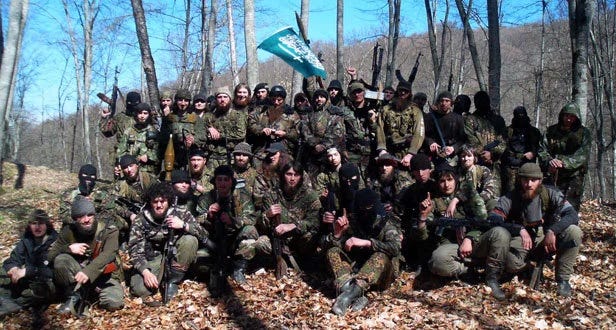
In tribal societies, as a magical means of achieving genetic superiority within the genealogical hierarchy of neighboring peoples, alongside the extermination of the nobility, the seizure of slaves and women for harems, ritual rape, cannibalism, and the mutilation of the corpses of slain enemies, ritual hunting of a totem animal was practiced. This ritual hunt either preceded or, at times, replaced military combat.
The significance of ritual hunting as a military-magical act is based on an anciently observed connection between the art of war and tribal customs, on the one hand, and the temperament and habits of the totemic or sacred beast, on the other. Falconry and canine hunts, baiting, and organized drives against bears and wolves - with their complex hunting-magical rituals - are still used to this day as a means of sustaining fighting spirit and strengthening martial charisma within professional military environments.
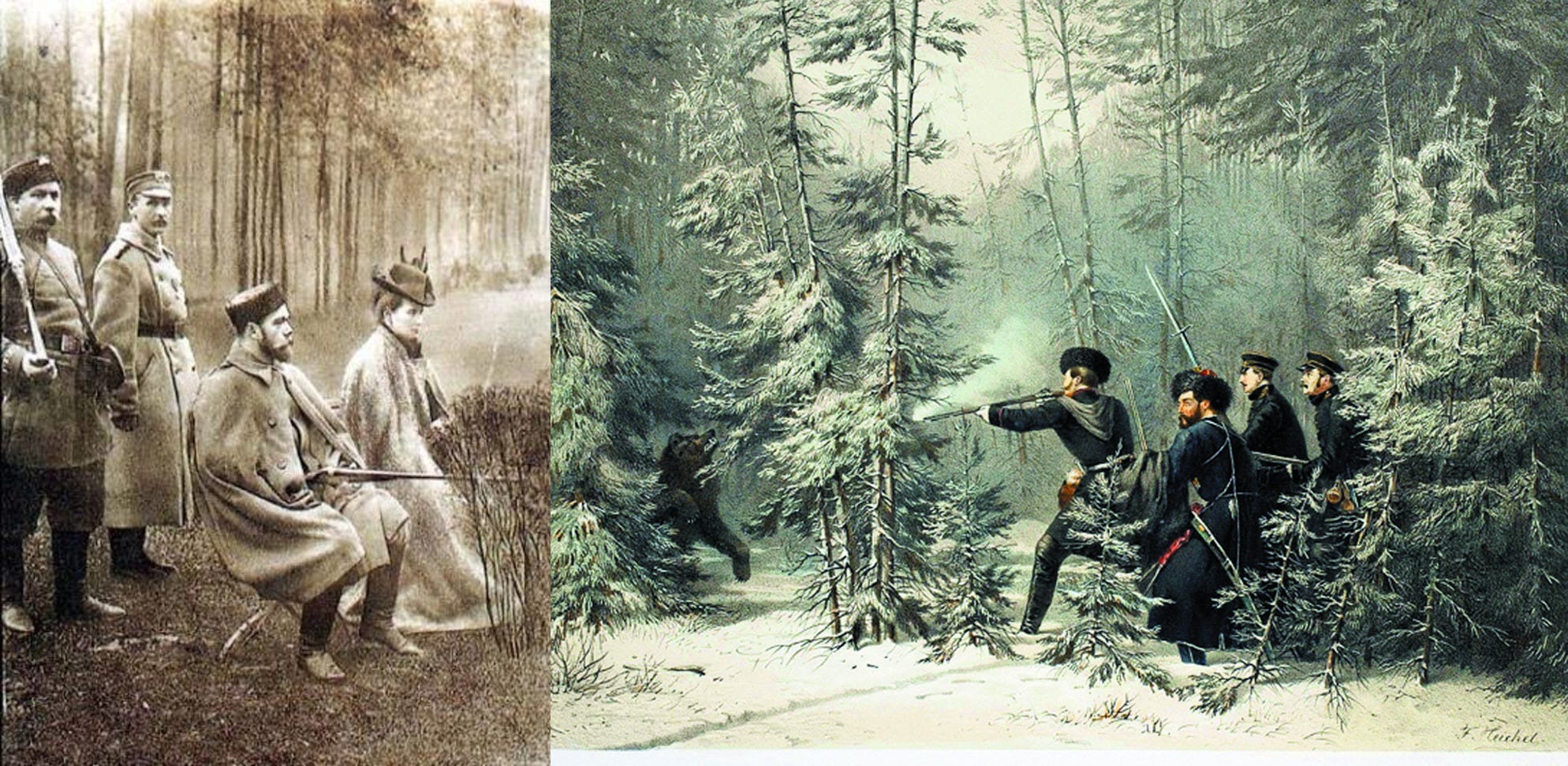
In times of war, ancient rituals of military and hunting magic activate within the human being genetically inherited psychosomatic mechanisms of aggressive behavior characteristic of predatory animals, mechanisms suppressed by the peaceful development of society.
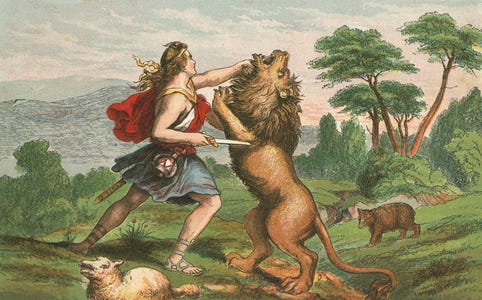
In the language of Orthodox asceticism, predatory beasts are understood as the two principal natural forces - anger and desire - which shape the tactics and strategy of aggressive behavior. Thus, King and Prophet David, when he was tending sheep, says: “Your servant has killed both lion and bear” (1 Samuel 17:36), rescuing what had been taken; this is understood, with regard to the soul, in the sense of ascetic self-mastery.
The natural force, transformed as a result of ascetic practice, is called a dog:
“After every thought of good desire, at the beginning of its movement, there follows a certain zeal which, by its ardor, resembles fiery coals (…). This zeal is a thought moved by the irascible power within the soul (…). It is called zeal because from time to time it moves, arouses, inflames, and strengthens a person to disregard the flesh amid sorrows and fearful temptations that befall him, unceasingly to deliver his soul unto death, and to go forth to meet the apostate force for the sake of accomplishing the deed which the soul has strongly desired. For one who has put on Christ has called this zeal, in his words, a dog and a guardian of the law of God…”
- St Isaac the Syrian, Works, Sergiev Posad, 1911, pp. 210–213.
The bestowal of the natural irascible power can be so great that it allows one to act by natural anger - that incorporeal power of the soul - as with a weapon, as is evident from the Life of the Holy Martyr Christopher, who is depicted in Orthodox icons clad in the garb of a warrior with a dog’s head.
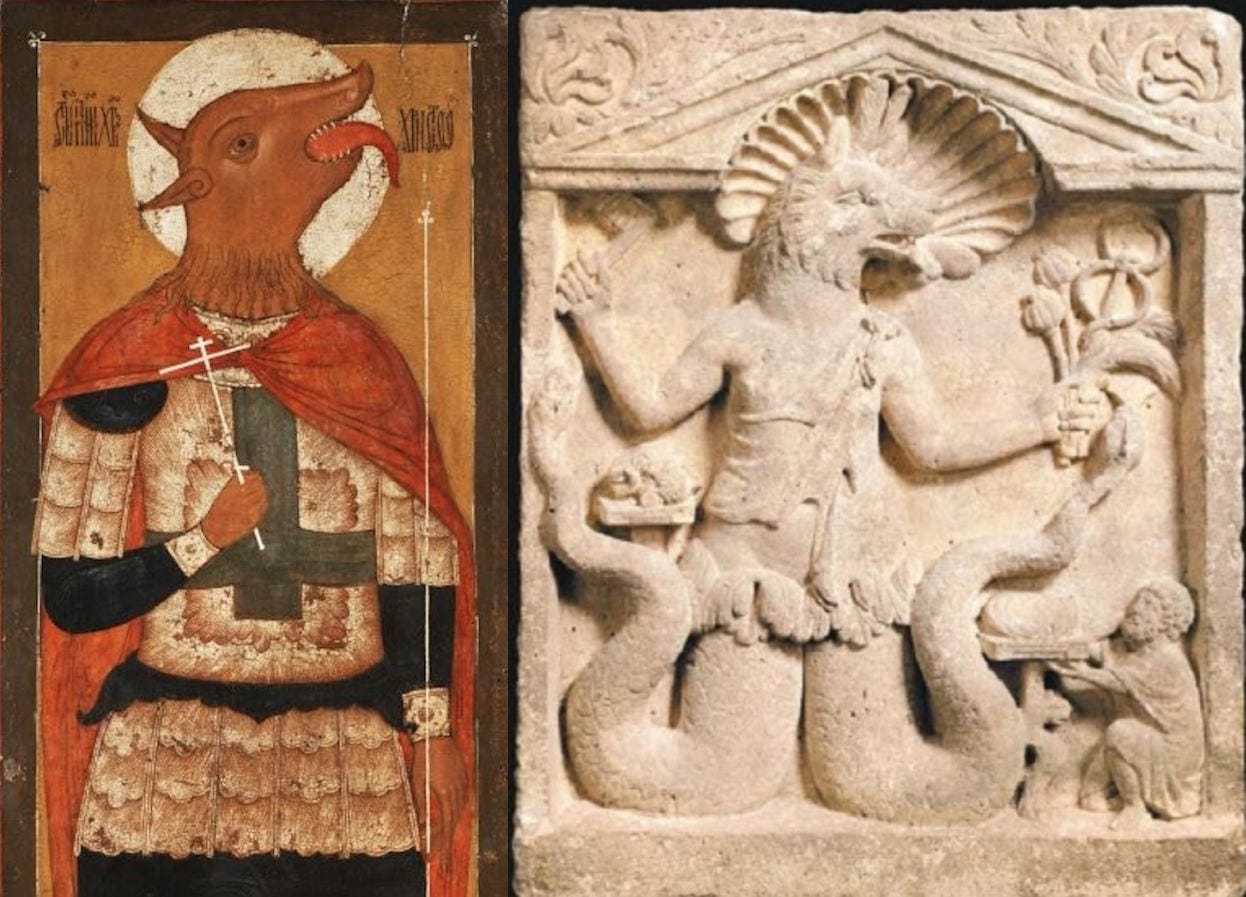
“Concerning this most glorious martyr, they relate something strange and extraordinary: namely, that he had the head of a dog and originated from the land of man-eaters. When he was taken captive in war by a certain comes (…), he began to rebuke those who persecuted the Christians. For this, a certain Bacchus beat him; but in response he said to Bacchus that he accepts the blows from him with humility solely for the sake of the commandment of Christ, and that if he were to yield to anger, neither Bacchus himself nor even the entire power of the emperor would stand, which he would reduce to nothing.”
- (Lives of Saints) Четьи-Минеи, May 10.
On dog-headed warriors of antiquity - whether this expression should be understood iconographically in a literal sense or as an allegory - there exists a considerable body of historical and legendary testimony. Franco Cardini refers to Paul the Deacon, who recounted that:
“…the Lombards, once finding themselves confronted by superior enemy forces, pretended that there were ‘dog-headed warriors’ in their camp. They spread a rumor that the dog-headed warriors were so ferocious that they fed only on blood, and, in the absence of the blood of enemies, drank their own.”
With regard to animal masks, a substantial number of documentary testimonies has been preserved. This custom reaches back into prehistory. As for the consumption of the blood of enemies - whether human or animal - this too is a common component of military magic. The same applies to “one’s own” blood, that is, the blood of one’s comrades.
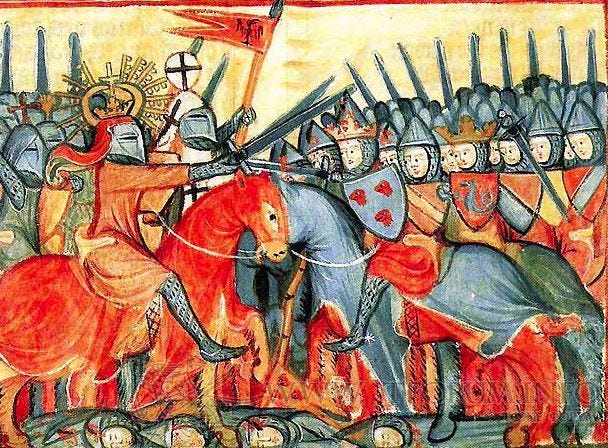
It cannot be ruled out that, having been surrounded, the Lombards resorted to the services of a ‘secret group,’ so to speak “awakening the beast” that had lain dormant until that time. A rumor is one thing, but the Lombards seriously threatened the enemy with unleashing their warrior-beasts upon them. For all the fragmentary and questionable nature of the sources, we are undoubtedly dealing here with an ancient military-religious custom of the Germanic peoples.
In their society, the existence of differentiated warrior associations endowed with special sacrality is well attested. At times they were a source of social danger; at times they brought benefit to society. These associations consisted of initiated warriors who differed from the rest of the population by their outward appearance. They employed a specific system of emblems and a distinctive manner of behavior. They led an atypical way of life. Their brotherhood was a “pack,” situated on the margins of civil society. Yet society made use of their services.
(Franco Cardini, The Origins of Medieval Knighthood, Moscow, 1987, p. 119)
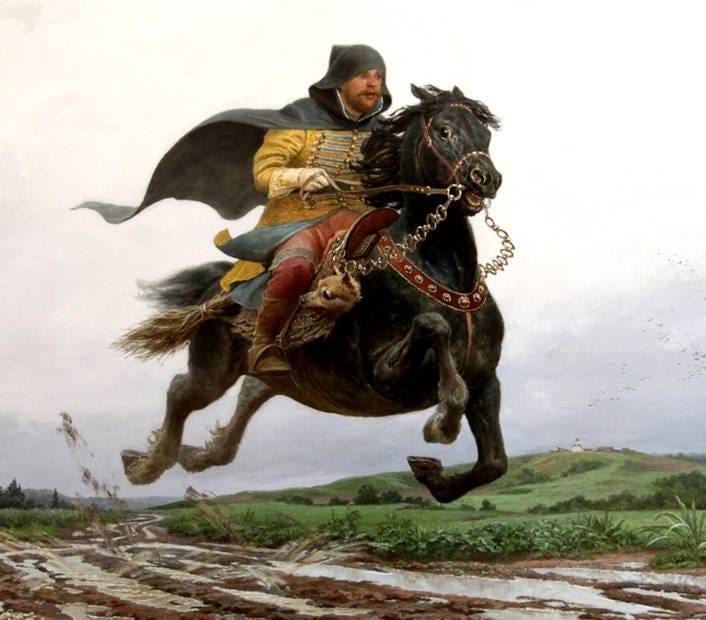
The spiritual-military situation that arose on the battlefields of medieval Europe was almost literally repeated in the history of the Muscovite state of the 16th century through the establishment of the oprichnina by the Right-believing Tsar Ivan IV of Russia. Likewise, during critical moments of national existence, when the very survival of the Orthodox Tsardom - this stronghold of Universal Orthodoxy - was threatened, the Russian Autocratic Tsar, with the blessing of the consecrated council of the Russian Church, summoned for the defense of the foundations of the state a spiritual-military force from the very depths of the people, “chosen from all the cities,” blood-inherited from the ancient Germanic and Scandinavian warrior-dogs-berserkers (literally - “bear skin”), or, in Church Slavonic, Varangians, descendants of the knightly druzhina warriors of the Russian princes, who formed the oprichnina brotherhood.
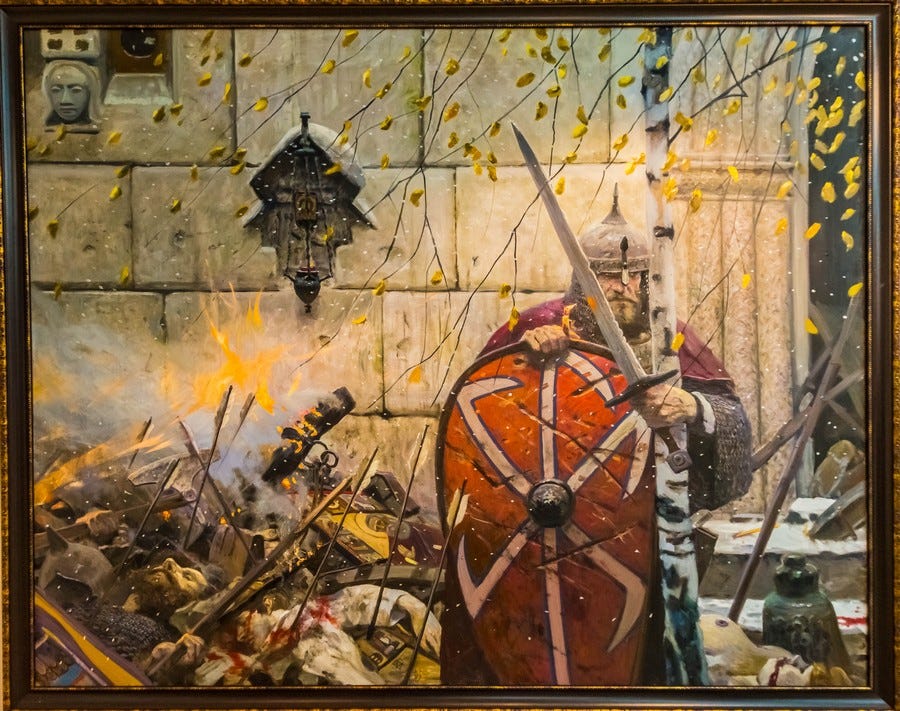
Having adopted as regalia of spiritual-mystical power dog heads and brooms, they swept through Holy Rus’ and eradicated state treason, leaving as a terror to the enemies of Christ an example of Christian spiritual might for all times until the end of the age. Replacing the military-magical practice of mutilating corpses with the wearing of the Savior’s Cross, and the ritual consumption of the flesh and blood of slain enemies with communion in the Holy Mysteries of the Body and Blood of Jesus Christ, the Russian Christ-loving host assimilated the military art of the ancient Germanic dog-headed warriors and Scandinavian bear-warriors and placed it in the service of the Orthodox Empire.