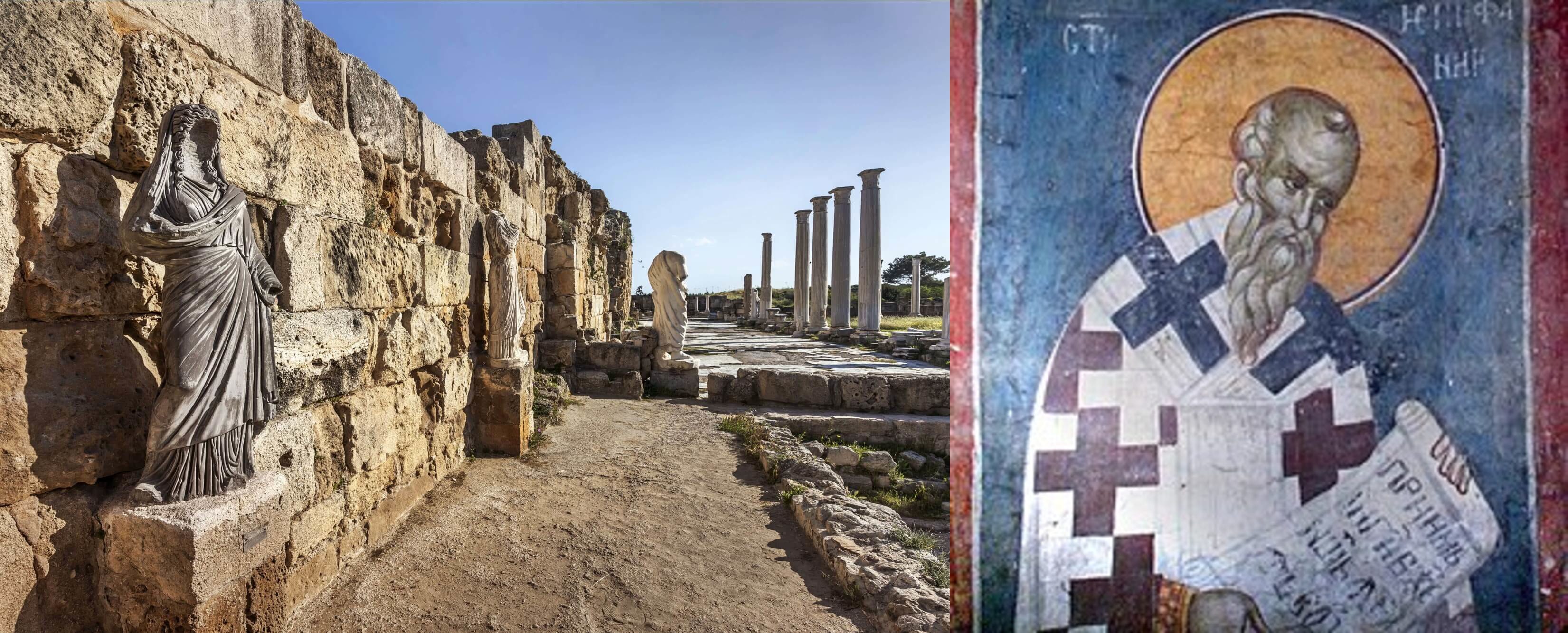
Holy Scripture testifies to the existence of homicidal rites among the inhabitants of the land of Canaan, which included acts of ritual cannibalism:
“For it was Your will to destroy by the hands of our fathers those old inhabitants of Your holy land, whom You hated for committing most hateful works of sorcery
and wicked sacrifices, merciless murderers of children,
devourers of human flesh and blood at sacrificial feasts, and those parents who killed helpless souls, so that the land You esteemed above all others
might receive a worthy dwelling place for the children of God.”
(Wisdom of Solomon 12: 3-8)
Echoes of primitive anthropophagy are also frequently encountered in the Psalter. The Lord reproaches the wicked through the mouth of the Prophet King David:
“Have all the workers of iniquity no knowledge,
Who eat up my people as they eat bread, and do not call on the LORD?”
(Psalm 14:4)
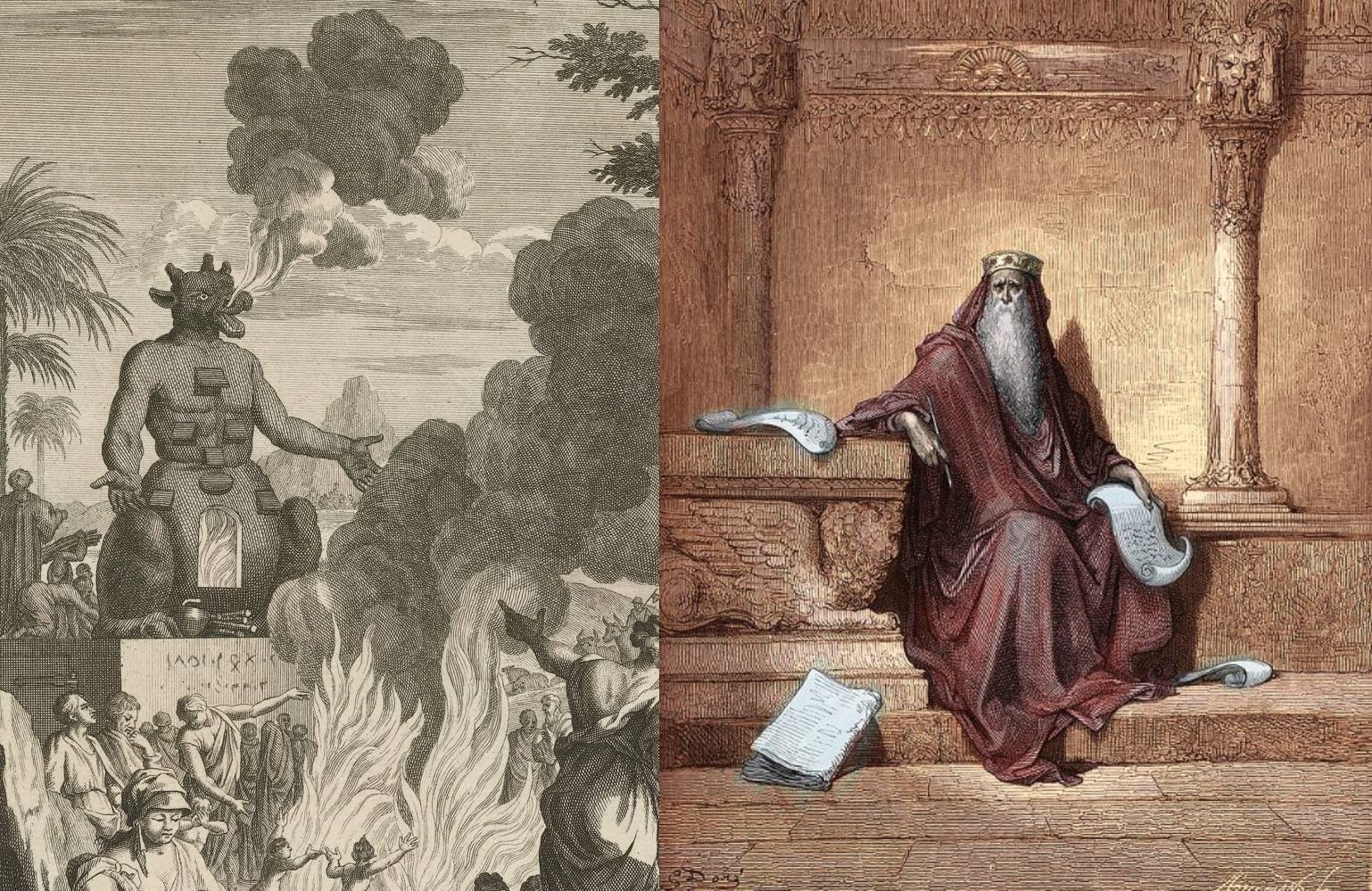
Likewise, in the description of a cannibalistic feast:
“They are satisfied with children,
And leave the rest of their possessions for their babes.”
(Psalm 17:14)
An explicitly cannibalistic meaning is present in the words of the Prophet King David praying for divine protection:
“When the wicked came against me
To eat up my flesh,
My enemies and foes,
They stumbled and fell.”
(Psalm 27:2)
Moreover, if this expression is understood as spoken in the person of the Lord Himself, as is often the case in patristic exegesis, then the passage also refers to those who approach the Holy Mysteries unworthily.
Holy Scripture further speaks of the Israelites imitating the inhabitants of Canaan:
“They mingled with the Gentiles
And learned their works;
They served their idols,
Which became a snare to them.
They even sacrificed their sons
And their daughters to demons,
And shed innocent blood,
The blood of their sons and daughters,
Whom they sacrificed to the idols of Canaan;
And the land was polluted with blood.
Thus they were defiled by their own works,
And played the harlot by their own deeds.”
(Psalm 106:35–39)
Ancient Church writers spoke of the intentional imitation of Christian sacraments and rites by pagan cult practices.
St. Justin is the first to react with indignation to this imitation:
“The same thing (concerning communion) the evil demons, in imitation, taught to be done also in the mysteries of Mithras; for, as you know and can ascertain, at the initiation of one who is being admitted into the mysteries, bread is presented and a cup of water.”
(St. Justin the Philosopher, First Apology, §66, p. 107)
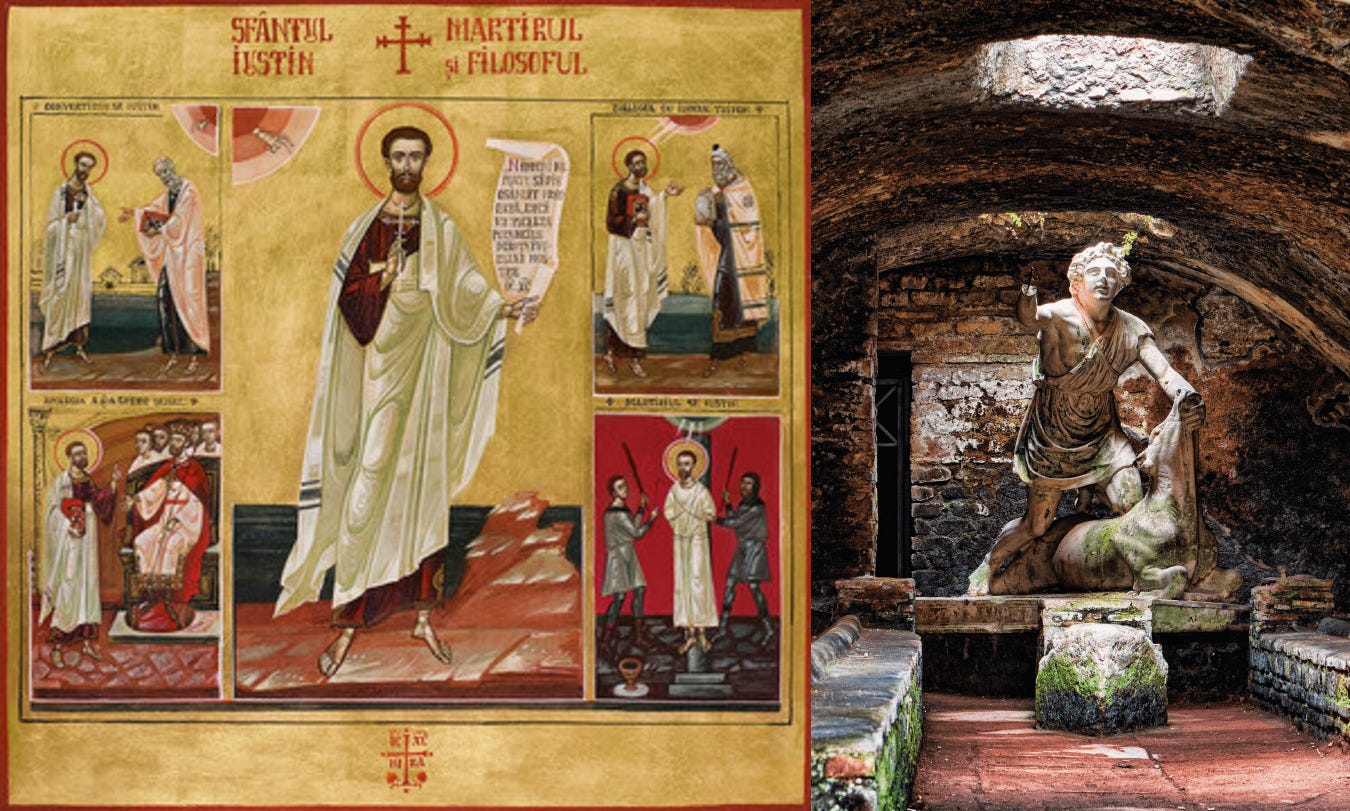
Tertullian writes even more extensively about this imitation:
“If anyone wished to ask who instigates and inspires heresies, I would answer: the devil, who makes it his task to conceal the truth from men and in every way strives, in the mysteries of false gods, to imitate the sacred rites of the Christian religion. He likewise plunges his worshipers into water and makes them believe that in this washing they receive the remission of their sins. He marks the foreheads of the soldiers of Mithras at their initiation; he offers bread; he presents an image of resurrection; he offers both a crown and a sword; he forbids his priests to marry again; he even has his own virgins.”
Moreover, clear imitation is also observable in sacrificial offerings.
(Count Sergey Uvarov, Christian Symbolism, Moscow, 1908, p. 71)
Christians of the first centuries carefully concealed from unbelievers the principal mysteries and dogmas of the faith, guarding the Eucharistic canon with particular strictness against profanation, in obedience to the Savior’s warning:
“Do not give what is holy to the dogs; nor cast your pearls before swine, lest they trample them under their feet, and turn and tear you in pieces.”
(Matthew 7:6)
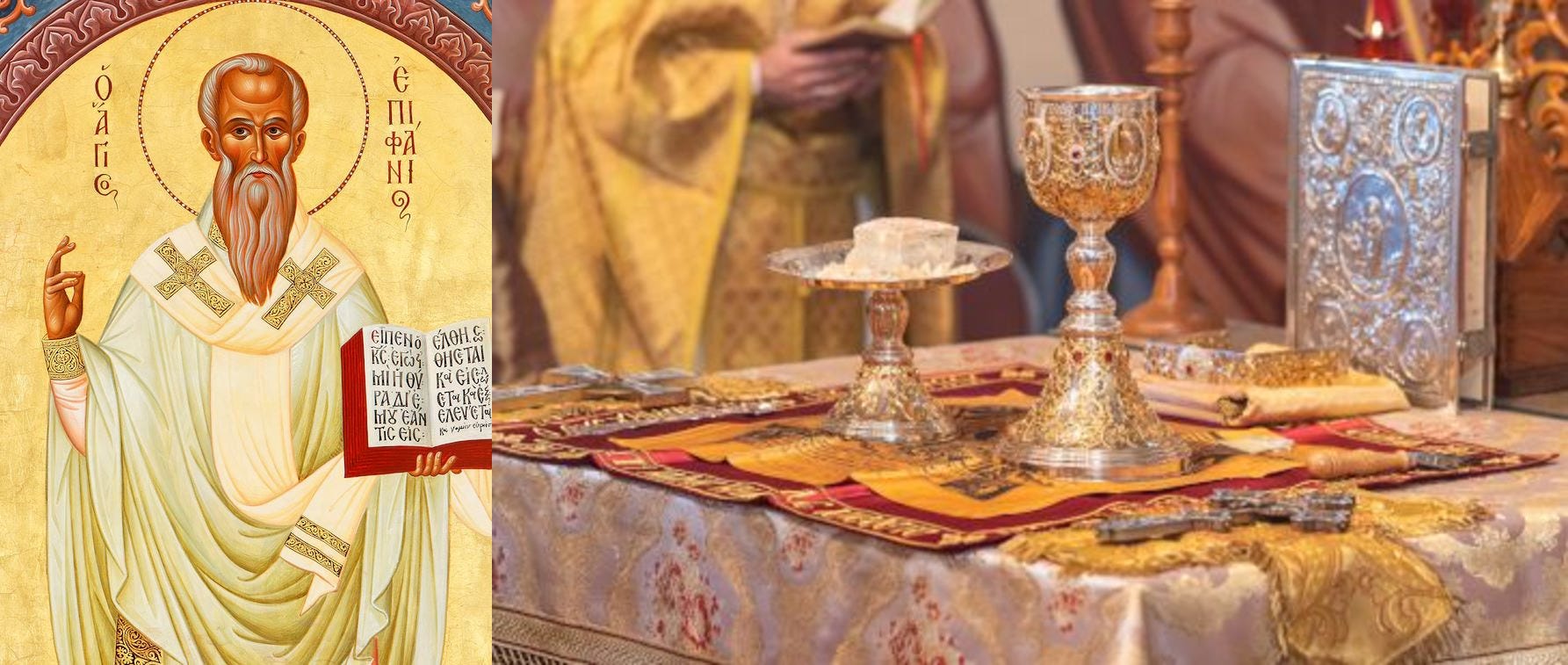
However, the idea - or at least the conjecture - of the mystical, redemptive significance of the Divine Blood, of the Sacrificial Lamb and of the spear that turns away the paradisal ‘flaming sword’ (Genesis 3:24) during the Liturgy of the Faithful, was not alien even to the so-called Gnostic sects.
Blessed Epiphanius, Bishop of Cyprus, writes of the heretics known as the Popizans, who performed sacrifices described in history under the name of ritual murders, forming the very foundation of a bloody satanic cult:
“The Popizans, and with them the Putilians, who consort with the female bread-makers. Two heresies arose from them among the Phrygians. Another of them rules over Popiza, a certain city lying deserted between Galatia, Cappadocia, and Phrygia, and is worshipped as a god, and they imagine that this Popiza is Jerusalem.
They entrust women with the authority to begin and to perform the priesthood. They defile themselves by piercing infants with cruel needles, as do the Phrygians, and by mixing the child’s blood with flour, making bread from it and receiving it as an offering.”
(Ephraim’s Kormchaya, л. 2566 (Old Russian Church-Slavonic book on canon law - Д.К)